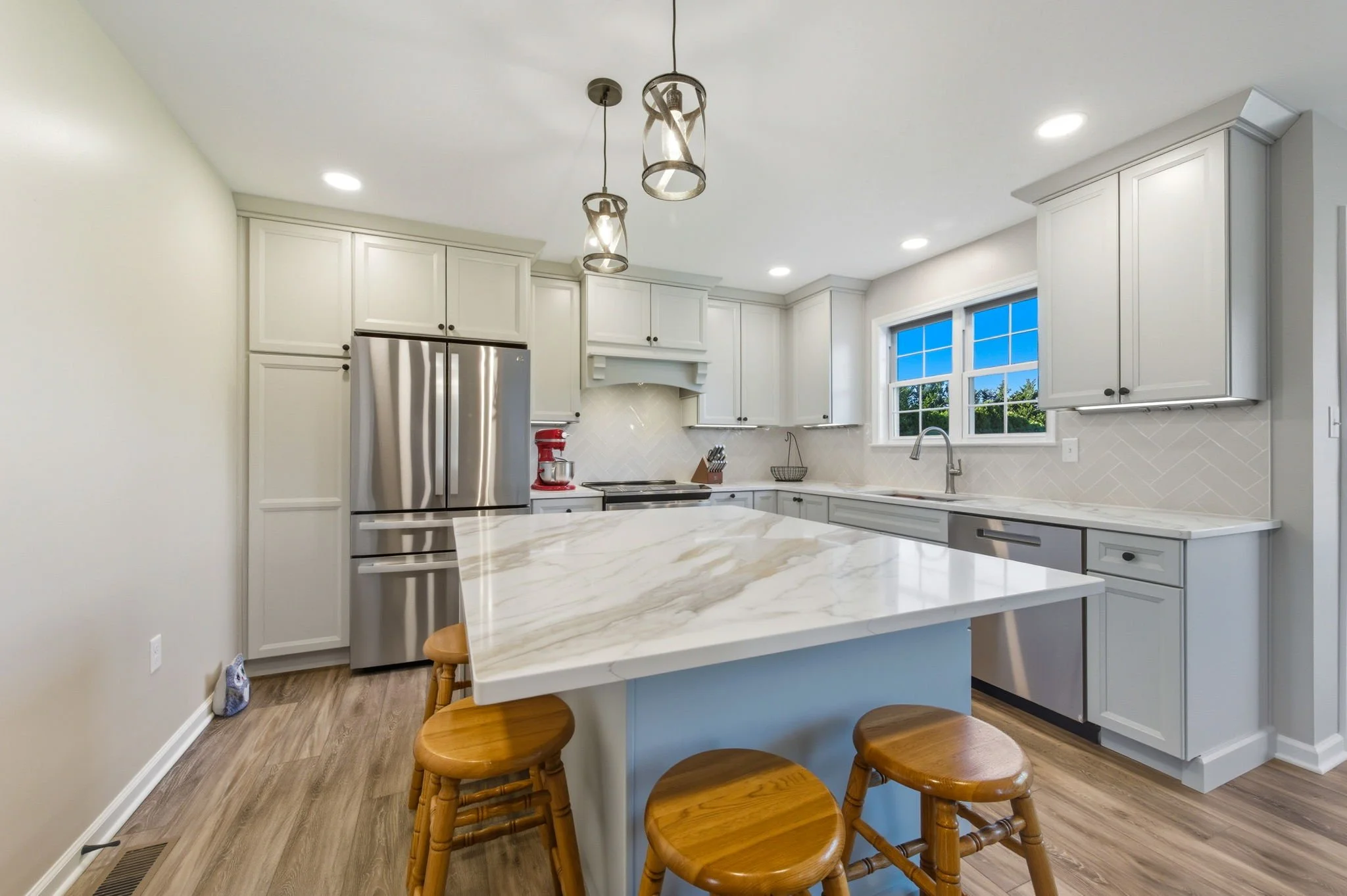
Preparing for Demo Day
A step-by-step guide to preparing your home, protecting your routines, and creating a practical temporary kitchen before renovation work begins.
Prepare Your Home for Demo Day
Demolition marks the official start of your renovation. These steps help the work begin safely, smoothly, and with less disruption to your household.
-
• Empty cabinets and drawers: Remove dishes, cookware, food, and personal belongings. • Clear countertops: Move small appliances, decorations, and other items off every surface. • Remove wall items: Take down artwork, mirrors, clocks, and wall hangings, including items on shared walls in adjacent rooms. • Store valuables safely: Move fragile or valuable items to a secure room outside the work zone.
-
• Temporary kitchen: Choose a dining room, basement, or guest area with a refrigerator, microwave, coffee maker, and toaster oven. Stock disposable or easy-to-wash dinnerware. • Alternate bathroom: Decide which remaining shower or bathroom your household will use throughout demolition and construction.
-
• Establish work zones: Confirm where plastic sheeting or zip-wall barriers will separate living spaces from the construction zone. • Protect paths and flooring: Clear hallways and entryways so the crew can move equipment and debris efficiently. • Cover HVAC vents: Close and seal supply and return vents in the work area to keep dust out of your heating and cooling system.
-
• Shut off utilities: Confirm water, gas, and electrical lines are identified and safely turned off before teardown. • Protect pets and children: Keep them in a distant room or away from the home to avoid hazards, noise, and heavy foot traffic. • Clear driveways and parking: Leave room for demo trucks, trailers, and dumpster placement.
Set Up a Functional Temporary Kitchen
A thoughtful temporary kitchen makes it easier to prepare meals, manage cleanup, and maintain your daily routine while your primary kitchen is under construction.
-
Choose a space outside the construction path with enough room and access to essential utilities. • Ideal spaces: Basement, dining room, large guest room, garage, or enclosed patio. • Stay near water: A wet bar, powder room, or laundry room makes washing dishes and filling pots easier. • Check electrical capacity: Use grounded outlets on separate circuits when possible because portable kitchen appliances draw significant power.
-
Choose a few versatile appliances that cover your everyday cooking needs. • Mini fridge: Milk, produce, condiments, and drinks • Microwave: Reheating, steaming vegetables, and quick meals • Electric skillet or induction burner: Searing, sautéing, eggs, and stovetop dishes • Toaster oven or air fryer: Baking, roasting, and crisping • Slow cooker or Instant Pot: One-pot meals, soups, and stews • Coffee maker or electric kettle: Coffee, tea, and boiling water
-
• Prep station: Use a sturdy folding table or utility cart as your main work surface. Cover it with a wipeable mat and store cutting boards, knives, and mixing bowls underneath. • Dishwashing station: Keep soap, a drying rack, and sponges beside a nearby sink. Without a sink, use two tubs: one for warm soapy water and one for rinsing. • Minimize washing: Recyclable or compostable plates, bowls, and napkins can reduce cleanup.
-
Bring only the items you use each week into the temporary space. • Use clear, labeled bins for breakfast items, spices and oils, snacks, and paper goods. • Add a rolling cart or small bookshelf to keep high-use items visible and within reach. • Limit pantry staples to basics such as salt, pepper, olive oil, and a few favorite spices.
-
• Batch cook before demolition: Freeze casseroles, soups, or shredded chicken for easy reheating. • Choose simple recipes: Focus on one-pot meals, salads, sandwiches, or small sheet-pan meals that fit a toaster oven. • Cook outdoors when possible: A grill or smoker can replace a standard cooktop when the weather cooperates.
What to Expect on Demo Day
-
Heavy equipment, power tools, and hammer work create significant noise throughout the day. Plan for a busy work zone and consider spending time away from the home if noise is disruptive for your household.
-
Removed materials will be hauled to a designated dumpster or disposal truck. Once drywall, cabinetry, or fixtures are removed, the crew will inspect concealed areas such as subflooring, wiring, and plumbing before rebuilding begins.
Knowing what will happen helps you plan for the noise, activity, and discoveries that can come with demolition.
Ready for a Smoother Demo Day?
Talk with Allura about your project schedule, preparation questions, and the best way to get your home ready before work begins.